Monday, October 3, 2016

St Terese of the Child Jesus (EF/Ben), Oct 3


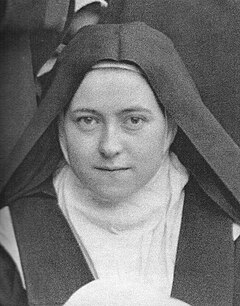
Teresa-de-Lisieux.jpg

From the martyrology:

"St Teresa of the Child Jesus, of the Order of Discalced Carmelites, Virgin, the special patroness of all the missions..."

St Terese of Lisieux (1873-97) is one of the small but growing band of female doctors of the Church.  One of the best known of all the saints, her 'little way' has been vastly influential.

Pope Benedict XVI gave a General Audience on her in 2011:


Today I would like to talk to you about St Thérèse of Lisieux, Thérèse of the Child Jesus and of the Holy Face, who lived in this world for only 24 years, at the end of the 19th century, leading a very simple and hidden life but who, after her death and the publication of her writings, became one of the best-known and best-loved saints. “Little Thérèse” has never stopped helping the simplest souls, the little, the poor and the suffering who pray to her. However, she has also illumined the whole Church with her profound spiritual doctrine to the point that Venerable Pope John Paul II chose, in 1997, to give her the title “Doctor of the Church”, in addition to that of Patroness of Missions, which Pius XI had already attributed to her in 1939. My beloved Predecessor described her as an “expert in the scientia amoris” (Novo Millennio Ineunte, n. 42). Thérèse expressed this science, in which she saw the whole truth of the faith shine out in love, mainly in the story of her life, published a year after her death with the title The Story of a Soul. The book immediately met with enormous success, it was translated into many languages and disseminated throughout the world.

I would like to invite you to rediscover this small-great treasure, this luminous comment on the Gospel lived to the full! The Story of a Soul, in fact, is a marvellous story of Love, told with such authenticity, simplicity and freshness that the reader cannot but be fascinated by it! But what was this Love that filled Thérèse’s whole life, from childhood to death? Dear friends, this Love has a Face, it has a Name, it is Jesus! The Saint speaks continuously of Jesus. Let us therefore review the important stages of her life, to enter into the heart of her teaching.
Thérèse was born on 2 January 1873 in Alençon, a city in Normandy, in France. She was the last daughter of Louis and Zélie Martin, a married couple and exemplary parents, who were beatified together on 19 October 2008. They had nine children, four of whom died at a tender age. Five daughters were left, who all became religious. Thérèse, at the age of four, was deeply upset by the death of her mother (Ms A 13r). Her father then moved with his daughters to the town of Lisieux, where the Saint was to spend her whole life. Later Thérèse, affected by a serious nervous disorder, was healed by a divine grace which she herself described as the “smile of Our Lady” (ibid., 29v-30v). She then received her First Communion, which was an intense experience (ibid., 35r), and made Jesus in the Eucharist the centre of her life.

The “Grace of Christmas” of 1886 marked the important turning-point, which she called her “complete conversion” (ibid., 44v-45r). In fact she recovered totally, from her childhood hyper-sensitivity and began a “to run as a giant”. At the age of 14, Thérèse became ever closer, with great faith, to the Crucified Jesus. She took to heart the apparently desperate case of a criminal sentenced to death who was impenitent. “I wanted at all costs to prevent him from going to hell”, the Saint wrote, convinced that her prayers would put him in touch with the redeeming Blood of Jesus. It was her first and fundamental experience of spiritual motherhood: “I had such great trust in the Infinite Mercy of Jesus”, she wrote. Together with Mary Most Holy, young Thérèse loved, believed and hoped with “a mother’s heart” (cf. Pr 6/ior).

In November 1887, Thérèse went on pilgrimage to Rome with her father and her sister Céline (ibid., 55v-67r). The culminating moment for her was the Audience with Pope Leo XIII, whom she asked for permission to enter the Carmel of Lisieux when she was only just 15. A year later her wish was granted. She became a Carmelite, “to save souls and to pray for priests” (ibid., 69v).

At the same time, her father began to suffer from a painful and humiliating mental illness. It caused Thérèse great suffering which led her to contemplation of the Face of Jesus in his Passion (ibid., 71rc). Thus, her name as a religious — Sr Thérèse of the Child Jesus and of the Holy Face — expresses the programme of her whole life in communion with the central Mysteries of the Incarnation and the Redemption. Her religious profession, on the Feast of the Nativity of Mary, 8 September 1890, was a true spiritual espousal in evangelical “littleness”, characterized by the symbol of the flower: “It was the Nativity of Mary. What a beautiful feast on which to become the Spouse of Jesus! It was the little new-born Holy Virgin who presented her little Flower to the little Jesus” (ibid., 77r).

For Thérèse, being a religious meant being a bride of Jesus and a mother of souls (cf. Ms B, 2v). On the same day, the Saint wrote a prayer which expressed the entire orientation of her life: she asked Jesus for the gift of his infinite Love, to be the smallest, and above all she asked for the salvation of all human being: “That no soul may be damned today” (Pr 2).

Of great importance is her Offering to Merciful Love, made on the Feast of the Most Holy Trinity in 1895 (Ms A, 83v-84r; Pr 6). It was an offering that Thérèse immediately shared with her sisters, since she was already acting novice mistress.

Ten years after the “Grace of Christmas” in 1896, came the “Grace of Easter”, which opened the last period of Thérèse’s life with the beginning of her passion in profound union with the Passion of Jesus. It was the passion of her body, with the illness that led to her death through great suffering, but it was especially the passion of the soul, with a very painful trial of faith (Ms C, 4v-7v). With Mary beside the Cross of Jesus, Thérèse then lived the most heroic faith, as a light in the darkness that invaded her soul. The Carmelite was aware that she was living this great trial for the salvation of all the atheists of the modern world, whom she called “brothers”.

She then lived fraternal love even more intensely (8r-33v): for the sisters of her community, for her two spiritual missionary brothers, for the priests and for all people, especially the most distant. She truly became a “universal sister”! Her lovable, smiling charity was the expression of the profound joy whose secret she reveals: “Jesus, my joy is loving you” (P 45/7). In this context of suffering, living the greatest love in the smallest things of daily life, the Saint brought to fulfilment her vocation to be Love in the heart of the Church (cf. Ms B, 3v).

Thérèse died on the evening of 30 September 1897, saying the simple words, “My God, I love you!”, looking at the Crucifix she held tightly in her hands. These last words of the Saint are the key to her whole doctrine, to her interpretation of the Gospel the act of love, expressed in her last breath was as it were the continuous breathing of her soul, the beating of her heart. The simple words “Jesus I love you”, are at the heart of all her writings. The act of love for Jesus immersed her in the Most Holy Trinity. She wrote: “Ah, you know, Divine Jesus I love you / The spirit of Love enflames me with his fire, / It is in loving you that I attract the Father” (P 17/2).

Dear friends, we too, with St Thérèse of the Child Jesus must be able to repeat to the Lord every day that we want to live of love for him and for others, to learn at the school of the saints to love authentically and totally. Thérèse is one of the “little” ones of the Gospel who let themselves be led by God to the depths of his Mystery. A guide for all, especially those who, in the People of God, carry out their ministry as theologians. With humility and charity, faith and hope, Thérèse continually entered the heart of Sacred Scripture which contains the Mystery of Christ. And this interpretation of the Bible, nourished by the science of love, is not in opposition to academic knowledge. The science of the saints, in fact, of which she herself speaks on the last page of her The Story of a Soul, is the loftiest science.

“All the saints have understood and in a special way perhaps those who fill the universe with the radiance of the evangelical doctrine. Was it not from prayer that St Paul, St Augustine, St John of the Cross, St Thomas Aquinas, Francis, Dominic, and so many other friends of God drew that wonderful science which has enthralled the loftiest minds?” (cf. Ms C 36r). Inseparable from the Gospel, for Thérèse the Eucharist was the sacrament of Divine Love that stoops to the extreme to raise us to him. In her last Letter, on an image that represents Jesus the Child in the consecrated Host, the Saint wrote these simple words: “I cannot fear a God who made himself so small for me! […] I love him! In fact, he is nothing but Love and Mercy!” (LT 266).

In the Gospel Thérèse discovered above all the Mercy of Jesus, to the point that she said: “To me, He has given his Infinite Mercy, and it is in this ineffable mirror that I contemplate his other divine attributes. Therein all appear to me radiant with Love. His Justice, even more perhaps than the rest, seems to me to be clothed with Love” (Ms A, 84r).

In these words she expresses herself in the last lines of The Story of a Soul: “I have only to open the Holy Gospels and at once I breathe the perfume of Jesus’ life, and then I know which way to run; and it is not to the first place, but to the last, that I hasten…. I feel that even had I on my conscience every crime one could commit… my heart broken with sorrow, I would throw myself into the arms of my Saviour Jesus, because I know that he loves the Prodigal Son” who returns to him. (Ms C, 36v-37r).

“Trust and Love” are therefore the final point of the account of her life, two words, like beacons, that illumined the whole of her journey to holiness, to be able to guide others on the same “little way of trust and love”, of spiritual childhood (cf. Ms C, 2v-3r; LT 226).

Trust, like that of the child who abandons himself in God’s hands, inseparable from the strong, radical commitment of true love, which is the total gift of self for ever, as the Saint says, contemplating Mary: “Loving is giving all, and giving oneself” (Why I love thee, Mary, P 54/22). Thus Thérèse points out to us all that Christian life consists in living to the full the grace of Baptism in the total gift of self to the Love of the Father, in order to live like Christ, in the fire of the Holy Spirit, his same love for all the others."

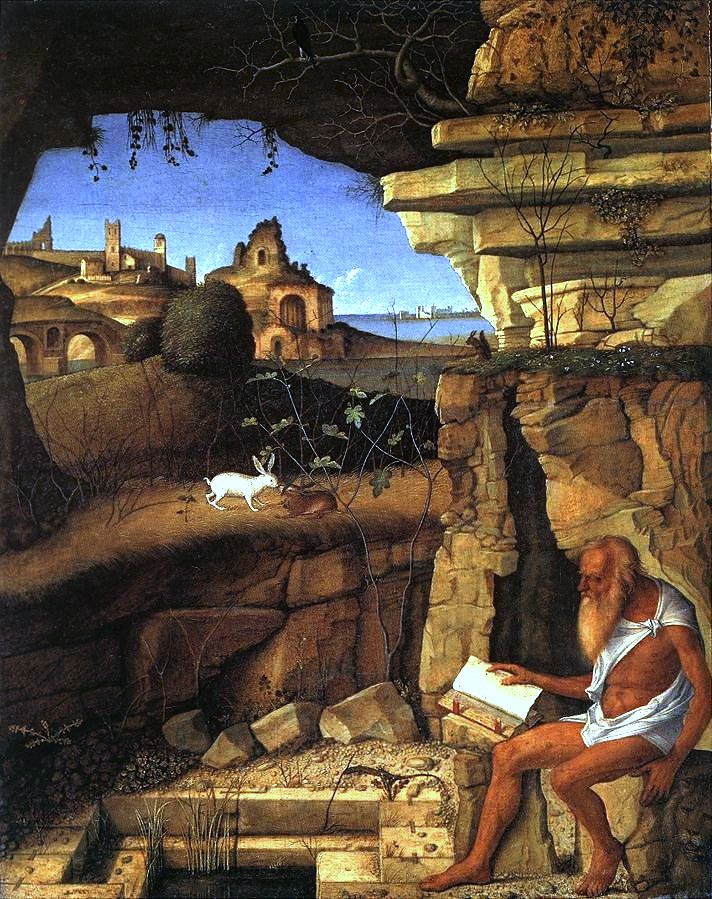
Friday, September 30, 2016

September 30: Feast of St Jerome, Priest, Confessor, Doctor of the Church, Class III


St Jerome is of course best known for his translations of the Bible into Latin (the Vulgate) and commentaries on Scripture, but he was also the founder of a monastic community in Bethlehem with a group of Roman women in 386.

St Jerome's knowledge of and interest in monasticism came largely from his trips to the East, including two (not entirely successful) years spent in an eremitical community. He wrote extensively on monasticism, and translated a number of key Eastern documents (such as the Rule of St Pachomius, which was known to St Benedict) into Latin.

He is a saint who can give hope to us all in that he was, as a 'difficult and hot-tempered man' who made many enemies (he had a less than amiable relationship with St Ambrose, and hotly debated views with St Augustine amongst others).

The Catholic Encyclopedia tells us that St Jerome was born at Stridon, a town on the confines of Dalmatia and Pannonia, about the year 340-2, and died at Bethlehem on 30 September, 420.

"He went to Rome, probably about 360, where he was baptized, and became interested in ecclesiastical matters. From Rome he went to Trier, famous for its schools, and there began his theological studies.

Later he went to Aquileia, and towards 373 he set out on a journey to the East. He settled first in Antioch, where he heard Apollinaris of Laodicea, one of the first exegetes of that time and not yet separated from the Church.

From 374-9 Jerome led an ascetical life in the desert of Chalcis, south-west of Antioch. Ordained priest at Antioch, he went to Constantinople (380-81), where a friendship sprang up between him and St. Gregory of Nazianzus.

From 382 to August 385 he made another sojourn in Rome, not far from Pope Damasus. When the latter died (11 December, 384) his position became a very difficult one. His harsh criticisms had made him bitter enemies, who tried to ruin him. After a few months he was compelled to leave Rome.

By way of Antioch and Alexandria he reached Bethlehem, in 386. He settled there in a monastery near a convent founded by two Roman ladies, Paula and Eustochium, who followed him to Palestine. Henceforth he led a life of asceticism and study; but even then he was troubled by controversies which will be mentioned later, one with Rufinus and the other with the Pelagians..."

Wednesday, September 28, 2016

September 29: Feast of the Dedication of St Michael the Archangel, Class I


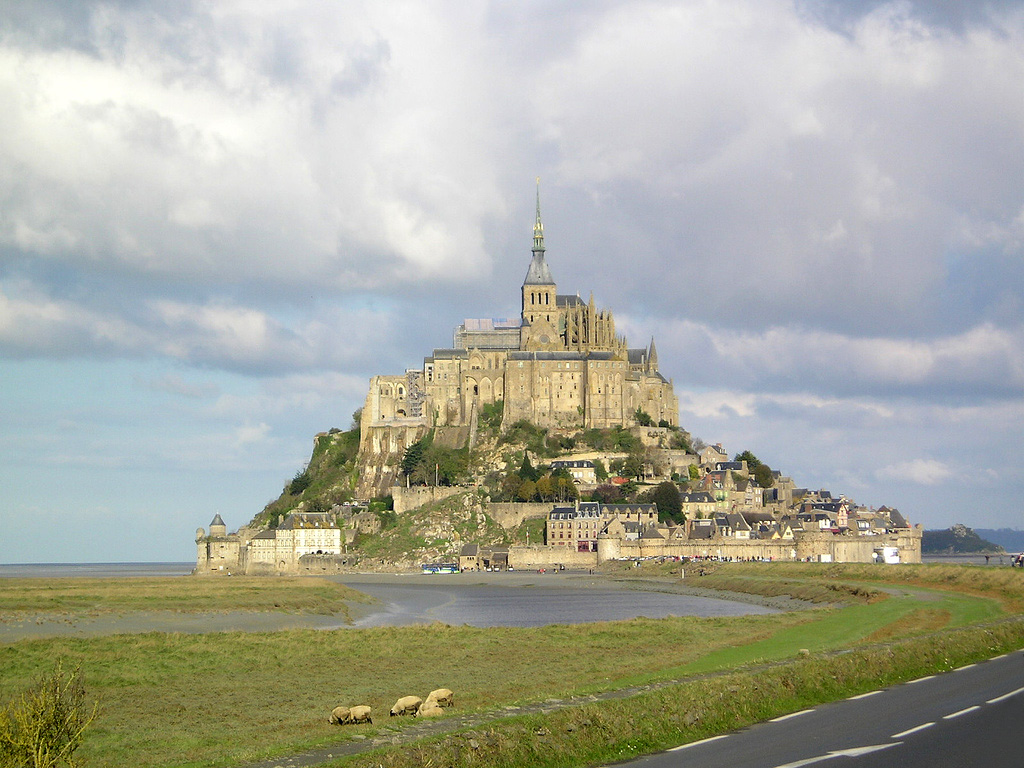
The most famous shrine to St Michael in Western Christendom is of course Mont St-Michel in France, where St. Michael appeared to St. Aubert, bishop of Avranches in 708 and instructed him to build a church on the rocky islet.  St Aubert repeatedly ignored the angel's instruction, being sceptical of apparitions, until St. Michael burned a hole in the bishop's skull with his finger! 

St Michael, whose name means Who is like God?", rates several Scriptural mentions:

(1) Daniel 10:13 sqq., Gabriel says to Daniel, when he asks God to permit the Jews to return to Jerusalem: "The Angel [D.V. prince] of the kingdom of the Persians resisted me . . . and, behold Michael, one of the chief princes, came to help me . . . and none is my helper in all these things, but Michael your prince."

(2) Daniel 12, the Angel speaking of the end of the world and the Antichrist says: "At that time shall Michael rise up, the great prince, who standeth for the children of thy people."

(3) In the Epistle of St. Jude: "When Michael the Archangel, disputing with the devil, contended about the body of Moses", etc.

(4) Apocalypse 12:7, "And there was a great battle in heaven, Michael and his angels fought with the dragon."

There is a lot more about him in the apocryphal Book of Enoch (quoted by St Jude), which, though judged not one of the inspired books of Scripture, still has considerable value.

The Catholic Encyclopedia notes that Christian tradition gives to St. Michael four offices:

•To fight against Satan.

•To rescue the souls of the faithful from the power of the enemy, especially at the hour of death.

•To be the champion of God's people, the Jews in the Old Law, the Christians in the New Testament; therefore he was the patron of the Church, and of the orders of knights during the Middle Ages.

•To call away from earth and bring men's souls to judgment ("signifer S. Michael repraesentet eas in lucam sanctam", Offert. Miss Defunct. "Constituit eum principem super animas suscipiendas", Antiph. off. Cf. The Shepherd of Hermas, Book III, Similitude 8, Chapter 3).  

St Michael, pray for us.

Tuesday, September 27, 2016

September 27: SS Cosmas and Damian, Memorial


According to the Catholic Encyclopedia, Cosmas and Damian, familiar to us from the litany, were:

"Early Christian physicians and martyrs whose feast is celebrated on 27 September.

They were twins, born in Arabia, and practised the art of healing in the seaport Ægea, now Ayash (Ajass), on the Gulf of Iskanderun in Cilicia, Asia Minor, and attained a great reputation.

They accepted no pay for their services and were, therefore, called anargyroi, "the silverless". In this way they brought many to the Catholic Faith.

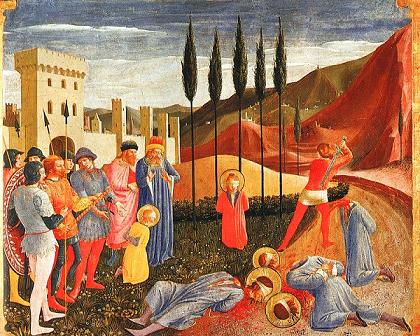
When the Diocletian persecution began, the Prefect Lysias had Cosmas and Damian arrested, and ordered them to recant. They remained constant under torture, in a miraculous manner suffered no injury from water, fire, air, nor on the cross, and were finally beheaded with the sword."

Friday, September 23, 2016

Pope St Linus I, Memorial: September 23


2-St.Linus.jpg

Pope Saint Linus I (d. ca. 76) was the second Bishop of Rome following St Peter.  St Irenaeus wrote:

"The blessed apostles, then, having founded and built up the Church, committed into the hands of Linus the office of the episcopate."

Not much is definitively known of his life (from the Wikipedia):

"According to the Liber Pontificalis, Linus was an Italian from Tuscany (though his name is Greek), and his father's name was Herculanus. The Apostolic Constitutions names his mother as Claudia (immediately after the name "Linus" in 2 Timothy 4:21 a Claudia is mentioned, but the Apostolic Constitutions does not explicitly identify that Claudia as Linus's mother). The Liber Pontificalis also says that he issued a decree that women should cover their heads in church, and that he died a martyr and was buried on the Vatican Hill next to Peter. It gives the date of his death as 23 September, the date on which his feast is still celebrated. His name is included in the Roman Canon of the Mass.

On the statement about a decree requiring women to cover their heads, J.P. Kirsch comments in the Catholic Encyclopedia: "Without doubt this decree is apocryphal, and copied by the author of the Liber Pontificalis from the first Epistle of St. Paul to the Corinthians (11:5) and arbitrarily attributed to the first successor of the Apostle in Rome. The statement made in the same source, that Linus suffered martyrdom, cannot be proved and is improbable. For between Nero and Domitian there is no mention of any persecution of the Roman Church; and Irenaeus (1. c., III, iv, 3) from among the early Roman bishops designates only Telesphorus as a glorious martyr."

The Roman Martyrology does not call Linus a martyr. The entry about him is as follows: "At Rome, commemoration of Saint Linus, Pope, who, according to Irenaeus, was the person to whom the blessed Apostles entrusted the episcopal care of the Church founded in the City, and whom blessed Paul the Apostle mentions as associated with him."

Thursday, September 22, 2016

Brush up your rubrics - what changes and what doesn't on major feasts

One of the things that can trip people up when saying the office is which parts of the Office do and don't change on feast days.

Levels of days

The first thing you need to know is that in the 1963 calendar used in the Ordo on this blog there are basically four levels of days - Class I (class one), Class II (class two), Class III (class three) and Class IV (class four).

Class IV means an ordinary day, with no feasts on it, so the Office is said as set out in the psalter section of the Diurnal, using any texts appropriate for the day/season/time of year.

Days that are Class III or higher will displace some or all of the normal day of the week/season texts used.  Which texts are affected and used instead depends on the hour of the Office being said, and the level of the feast.

Days vs feasts

A key distinction to be aware of is between 'days' (ferias) and feasts.  This coming Friday and Saturday for example, are Ember Days and are Class II, however only the collect (at the day hours other than Prime and Compline) and NT canticle antiphons change.

By contrast, on a second class feast like that of St Matthew on Wednesday, many more of the texts will change at some of the hours.

Chant tones vs texts

The other thing to note is that if you are listening to a podcast of the Office, or attending it in person in a monastery, it might all sound different even when the texts are actually mostly not changed.

At Prime, for example, the only text that changes on a feast is the antiphon.  However, where it is sung using Gregorian chant (rather than just recto tono, or on one note), a different hymn tune will normally be used to reflect the level of the feast, and the psalm tone used will reflect the antiphon for the feast.

What changes and what doesn't on Class I&II feasts?

The table below summarises whether or not the relevant part of the Office changes on a Class I or II feast.  In general:

  • the opening and closing prayers (other than the collect) do not change (but the opening prayers might have a more elaborate chant tone);
  • Compline is not affected by feasts (except that the solemn tone for the Marian antiphon might be used);
  • at Prime, the only thing that changes is the antiphon for the psalms.

Affected by Class I&II feasts?

Matins
Lauds
Prime
Terce,
Sext &
None
Vespers
Compline
Opening prayers

                                                    No
Hymn

Yes
Yes
No
No
Yes
No
Antiphon(s)
Yes
Yes
Yes
Yes
Yes
Not applicable
Psalms

Yes
Some
No
No
Yes
No
OT canticle(s)
Yes
Yes (optional festal)
na
na
na
na
Chapter

Yes
Yes
No
Yes
Yes
No
Versicle

Yes
Yes
No
Yes
Yes
No
Responsory

Yes
Yes
No
na
Yes
na
Antiphon for NT
canticle

na
Yes
na
na
Yes
na
NT canticle

Yes
No
na
na
No
na
Reading(s)

Yes
na
na
na
na
No
Collect

Yes
Yes
No
Yes
Yes
No
Closing prayers other than collect
                                                     
                                                          No


Hope this helps a bit, but do ask if you have any questions, or let me know if I've made a mistake!

September 22: St Maurice and Companions


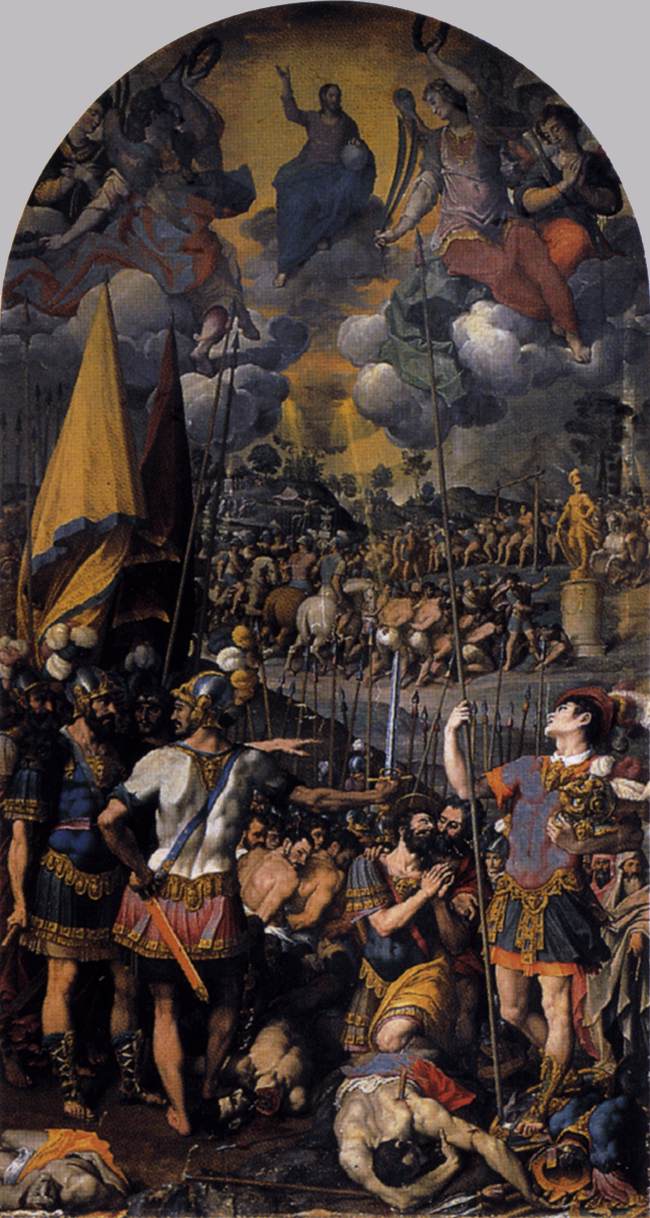
Saint Maurice was the leader of the Roman Theban Legion in the 3rd century,  massacred at Agaunum, about 287, by order of Maximian Herculius.   The legion was composed entirely of Christians.  There are two versions of the legend:  according to one, the legion refused orders to harass innocent Christians.  According to the other, the soldiers refused orders to sacrifice to the pagan gods. Either way, every tenth was then killed. Another order to sacrifice and another refusal caused a second decimation and then a general massacre.